The Best Baked Salmon Recipe (Juicy, Flaky & Full of Flavor!)
The Best Baked Salmon
Juicy, Flaky & Full of Flavor
The salmon recipe that turns skeptics into seafood lovers. Perfectly cooked every time, with a glaze that caramelises beautifully and a texture that melts in your mouth.
If you’ve ever pulled overcooked, chalky salmon from the oven and wondered what went wrong — this recipe is for you.
Baked salmon is one of the fastest, healthiest, and most impressive meals you can make at home. The problem is most recipes treat it like a simple protein and miss the details that make it extraordinary. This one doesn’t.
With one simple glaze, the right oven temperature, and a single technique change, you’ll get salmon that’s deeply golden on top, silky and just-flaking inside, and packed with flavour all the way through.
per serving
Oven heat surrounds the fillet from all sides, cooking it gently and consistently — no burnt edges, no raw centre.
The glaze forms a protective layer on top that seals in the natural fats, keeping every bite juicy from edge to edge.
Once it’s in the oven, you’re free. No standing over a pan. No flipping. Just set a timer and come back to perfection.
What You’ll Need
Simple, quality ingredients. Use fresh salmon if you can — it makes a noticeable difference to both texture and flavour.
Choosing your salmon: Atlantic salmon is richest and most forgiving. Sockeye is leaner and more intensely flavoured but overcooks faster. Both work here — just watch Sockeye closely and pull it a minute earlier. Always choose fillets of even thickness for the most consistent result.
Step-by-Step Instructions
-
1Bring salmon to room temperature ⏱ 20 min
Take the salmon out of the fridge 20 minutes before cooking. Cold fish hitting a hot oven cooks unevenly — the outside toughens while the inside stays undercooked. Room temperature fillets cook gently and evenly from edge to centre.
-
2Preheat oven and prepare the glaze ⏱ 5 min
Preheat your oven to 200°C / 400°F. While it heats, whisk together all the glaze ingredients in a small bowl — honey, soy sauce, minced garlic, Dijon, lemon juice, melted butter, ginger, and paprika. Taste it. It should be sweet, tangy, and deeply savoury. Adjust to your preference.
-
3Prep the salmon fillets ⏱ 3 min
Pat the salmon fillets completely dry with paper towels — this step is essential for good caramelisation. Line a baking tray with foil and lightly grease it, or use a wire rack set over a tray for even airflow. Place salmon skin-side down. Brush lightly with olive oil, then season with salt and pepper.
-
4Apply the glaze generously ⏱ 2 min
Spoon or brush the honey-garlic glaze over each fillet, covering the entire top and sides. Don’t be shy — a thick, generous layer of glaze is what creates that deeply caramelised top. Reserve a small amount of glaze to brush on halfway through baking.
-
5Bake to perfection ⏱ 12–15 min
Bake at 200°C / 400°F for 12–15 minutes depending on thickness. At the halfway point (6–7 minutes), open the oven and spoon the reserved glaze back over the fillets. The salmon is done when it flakes easily with a fork at its thickest point, or when the internal temperature reads 52–54°C / 125–130°F for silky medium, or 60°C / 140°F for fully cooked.
-
6Optional: finish under the grill ⏱ 2 min
For a deeply caramelised, almost lacquered top, switch the oven to grill / broil for the final 1–2 minutes. Watch it closely — the sugars in the honey can go from beautifully golden to burnt in under a minute. The result is a glossy, slightly sticky glaze with incredible depth.
-
7Rest briefly and serve ⏱ 3 min
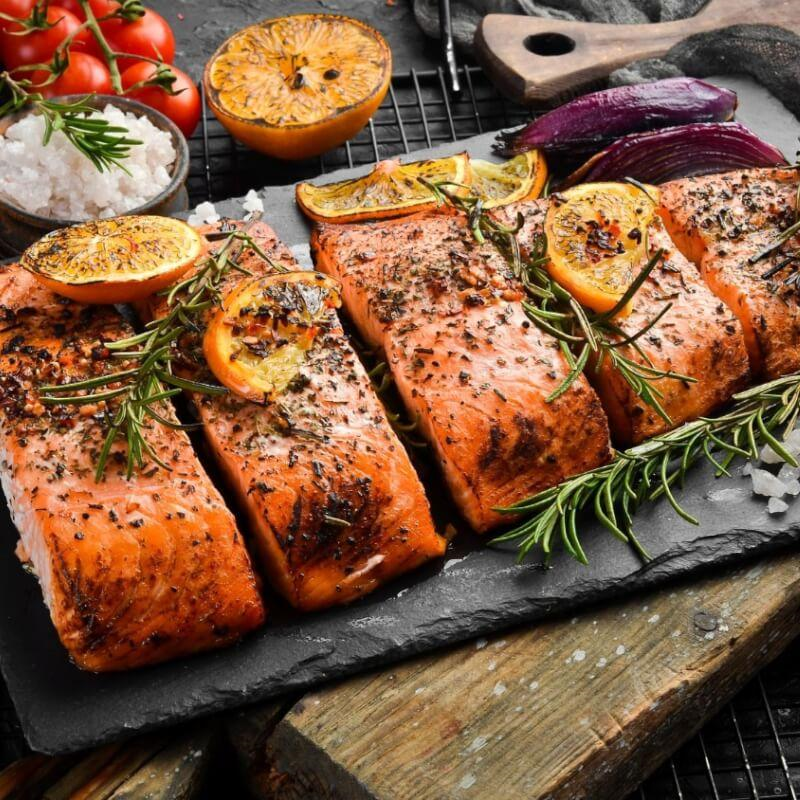
Remove from the oven and rest for 2–3 minutes. This matters even for fish — the residual heat continues cooking gently, and the juices settle. Serve with a squeeze of fresh lemon, a scatter of dill or parsley, and sesame seeds if you like. Spoon any glaze that pooled on the tray back over the fillets just before plating.
The most common mistake: Overbaking. Salmon keeps cooking after it leaves the oven, so pulling it out 1–2 minutes early and resting it is always better than leaving it in too long. Overcooked salmon turns chalky, dry, and grey — and no glaze can save it at that point.
Salmon Doneness Chart
Salmon is one of the few proteins where “perfect” depends entirely on personal preference. Here’s your complete reference:
| Doneness | Internal Temp | Texture | Status |
|---|---|---|---|
| Rare / Raw centre | 43–46°C / 110–115°F | Translucent, very soft, sashimi-like | Personal choice |
| Medium-rare | 49–52°C / 120–125°F | Barely opaque, silky, ultra moist | Chef’s favourite |
| Medium ✦ ideal | 52–54°C / 125–130°F | Just flaking, juicy, rich | Most popular |
| Fully cooked | 60°C / 140°F | Flaky throughout, firmer | Family-safe |
| Overcooked | Above 66°C / 150°F | Dry, chalky, white proteins leaching out | Avoid |
Nutrition at a Glance
Salmon is one of the most nutritionally complete foods you can eat — rich in omega-3s, high in protein, and loaded with vitamins D and B12.
8 Tips for Perfect Baked Salmon
These are the small details that take your salmon from good to unforgettable:
Moisture on the surface prevents caramelisation. Dry fish + hot oven = glorious golden top.
The only way to guarantee perfect doneness. Target 52–54°C for restaurant-quality results.
Brushing again halfway through creates a layered, deeply caramelised coating that single-coat glazing can’t match.
The skin acts as a natural insulator, protecting the flesh from direct heat and keeping it moist throughout.
Try to use fillets of similar thickness so they all finish at the same time. Tuck thin tail ends under if needed.
Place lemon slices under and around the salmon as it bakes. They steam gently, adding citrus fragrance throughout.
Even 2–3 minutes of resting after baking makes a difference. The heat distributes evenly and the texture improves noticeably.
Leftover salmon keeps 2 days in the fridge. Reheat in a covered pan over very low heat with a splash of water — never microwave at full power.
Perfect Pairings
This salmon is versatile enough to anchor almost any meal. Here are three reliable combinations:
Cucumber ribbon salad, avocado, and a sesame-lime dressing. Clean and vibrant.
Steamed jasmine rice, roasted tenderstem broccoli, and a drizzle of the pan glaze.
Creamy mashed potato, green beans, and a squeeze of lemon over everything.
4 Glaze Variations to Try Next
Once you’ve mastered the base recipe, these flavour twists are worth every bit of experimentation:
-
Miso Sesame
Swap honey for white miso paste, add sesame oil and rice vinegar. Deep, umami-forward, and extraordinary.
-
Herb & Crust
Skip the wet glaze. Press a mixture of breadcrumbs, Parmesan, lemon zest, and fresh herbs onto the top. Bake until golden and crunchy.
-
Coconut Lime
Replace soy sauce with coconut aminos and lime juice instead of lemon. Add a pinch of chili. Tropical and bright.
-
Teriyaki Style
Double the soy sauce, add mirin and a little brown sugar in place of honey. Classic sweet-salty Japanese profile.
Meal prep tip: This salmon reheats beautifully in a salad — serve it cold or at room temperature over greens with a tahini dressing. It’s just as good the next day. Make double and thank yourself tomorrow.
The Salmon Recipe You’ll Come Back To
Baked salmon doesn’t have to be boring, dry, or complicated. With the right glaze, the right temperature, and a little attention to the details that most recipes skip — it becomes the kind of meal people genuinely get excited about.
This recipe works for a quick weeknight dinner, an impressive dinner party centrepiece, or healthy meal prep that actually tastes like a treat. Once it’s in your rotation, it stays there.