How to Cook Tender Beef Like a Chef
How to Cook Tender Beef
Like a Chef
The secrets professional chefs use every day — finally decoded for your home kitchen.
You’ve eaten perfectly tender, melt-in-your-mouth beef at a restaurant and wondered: how do they do it? The good news — it’s not magic, and it’s not expensive. It’s technique. In this guide, you’ll learn exactly how professional chefs turn a simple cut of beef into something unforgettable, every single time.
Why Beef Gets Tough (And How to Fix It)
Tough beef isn’t a mystery. It happens when muscle fibers tighten under too much heat, too fast — or when a chewy cut doesn’t get the low, slow treatment it needs.
The two key proteins are collagen (which makes cheap cuts tough but also, when cooked correctly, silky) and myosin (which stiffens above 60°C). Know how to manage these, and you own the result.
Ingredients
This method works for a classic pan-seared steak. Choose your cut based on your goal: ribeye for richness, sirloin for balance, or chuck for braising.
How to Cook Tender Beef — Step by Step
-
1Start with dry, room-temperature beef
Take your beef out of the fridge 45–60 minutes before cooking. Pat it completely dry with paper towels. Moisture on the surface = steam in the pan = no crust. A dry surface is your golden crust’s best friend.
-
2Season generously — and early
Salt at least 40 minutes before cooking (or up to 24 hours, uncovered, in the fridge). Salt draws out moisture, then that moisture gets reabsorbed along with the seasoning. Season with black pepper just before hitting the pan — pepper can burn.
-
3Get your pan screaming hot
Use a heavy cast-iron or stainless steel pan. Heat it over high heat for 2–3 minutes until it just starts to smoke. Add your oil — not butter yet (butter burns at high heat). You want that hard sizzle the moment beef touches pan.
-
4Sear without moving
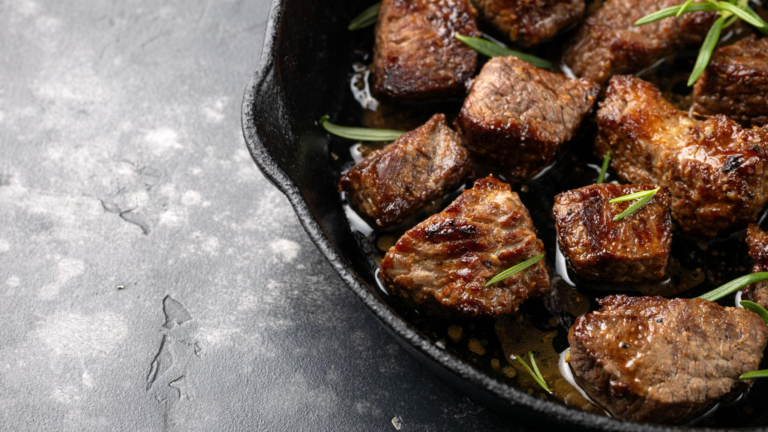
Place the steak down and don’t touch it for 2–3 minutes. Let the Maillard reaction work. You’ll know it’s ready to flip when it releases cleanly from the pan. Flip once. Sear the other side for 2 minutes.
-
5Baste with butter, garlic & herbs
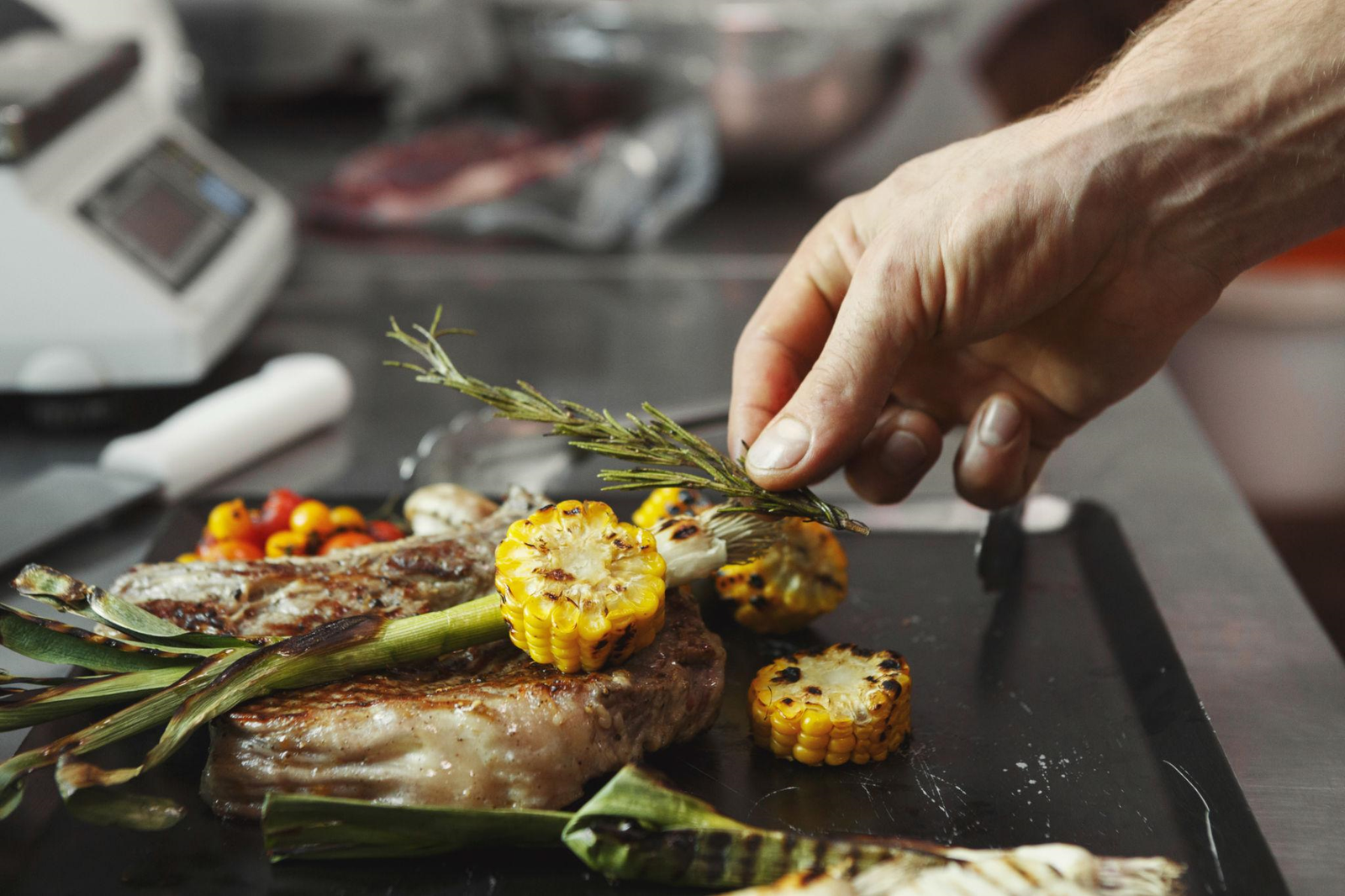
Reduce heat to medium. Add butter, garlic, and herbs. As the butter foams, tilt the pan and use a spoon to repeatedly pour the fragrant butter over the top of the steak. Do this for 60–90 seconds. This is the chef’s move that changes everything.
-
6Rest. Don’t skip this.
Remove from heat and rest on a warm plate for 5–8 minutes. Resting lets the juices redistribute through the meat. Cut too soon and all that goodness runs out. Tent loosely with foil if needed.
-
7Slice against the grain
Look at the muscle fibers running through the meat. Always cut perpendicular to those lines. This shortens the fibers, making each bite effortlessly tender — no matter the cut.
“The difference between a good steak and a great steak is usually just patience — in salting, in searing, and above all, in resting.”
— Classic French kitchen principleInternal Temperature Reference
A meat thermometer is the most professional tool you can own. Use it. Here’s your reference:
| Doneness | Internal Temp | Description |
|---|---|---|
| Rare | 49–52°C (120–125°F) | Bright red center, very soft |
| Medium Rare | 55–57°C (130–135°F) | Pink, warm center — chef’s favorite |
| Medium | 60–63°C (140–145°F) | Pink fading to brown, juicy |
| Medium Well | 65–68°C (150–155°F) | Slightly pink, firmer |
| Well Done | 71°C+ (160°F+) | No pink, fully cooked through |
Chef Secrets for Perfect Beef Every Time
These are the small details that separate a home cook from a professional result:
For quick cooking: ribeye, sirloin, tenderloin. For braising: chuck, brisket, short rib. Using the wrong cut for the wrong method is the #1 mistake.
Salt 45 min+ before cooking, or right before. The danger zone is 5–40 minutes — that’s when moisture sits on the surface without being reabsorbed.
The finger-press method is unreliable. A probe thermometer costs under €15 and removes all guesswork. It’s the single best upgrade you can make.
For the most tender result: season your beef and leave it uncovered in the fridge overnight. The surface dries out, and the interior gets seasoned deeply.
Acids (citrus, wine, vinegar) and enzymes (papaya, pineapple) break down tough muscle fibers. Marinate for 4–24 hours — never more, or texture suffers.
After resting the steak, add red wine or stock to the hot pan, scrape up the fond (browned bits), reduce by half. That’s your restaurant-quality pan sauce.
Now Go Cook Something Incredible
Tender beef isn’t reserved for Michelin-star restaurants or professional kitchens. With the right cut, a little patience, and these techniques, your next beef dish will genuinely impress — including yourself.
Remember: dry the meat, season early, get the pan hot, rest before cutting. Four steps. Zero compromise.